
eyelid ptosis surgery
Eyelid Ptosis Surgery
Correction of upper lid droop by shortening the levator muscle, with both aesthetic and functional impact.

Duration
1-2 hours
Anesthesia
Local anesthesia with light sedation
Result
Lasting result, generally permanent
Overview
Eyelid ptosis is drooping of the upper lid caused by dysfunction of the levator muscle (levator palpebrae superioris). It may be congenital, acquired through aging or secondary to trauma. Beyond aesthetics, ptosis can narrow the visual field and force patients to permanently lift their brows to see, causing eye fatigue and headaches.
Dr. Mubariz Mammadli performs ptosis correction through shortening of the levator muscle (levator resection) or the Müller technique, depending on the degree of ptosis and residual muscle function. The surgery uses a hidden incision in the upper lid's natural crease and can be combined with blepharoplasty for a complete aesthetic result.
Who it is for
- Patients with upper lid droop partially covering the pupil
- People with congenital ptosis (from birth)
- Patients with senile or post-traumatic ptosis
- People who permanently raise their brows to see
- Patients with headaches or eye fatigue caused by ptosis
Procedure overview
- Ophthalmologic evaluation with measurement of levator function
- Local anesthesia with cooperative patient for intraoperative adjustment
- Incision in the natural upper lid crease
- Identification, shortening and refixation of the levator muscle
- Fine suture closure and symmetry check in sitting position
Recovery and aftercare
- Cold compresses for 48 hours
- Artificial tears for 4-6 weeks to protect the cornea
- Occlusive dressing at night during the first week
- Suture removal at 5-7 days
- Avoid physical effort and head bending for 2 weeks
Frequently asked questions
What is eyelid ptosis?
It is drooping of the upper lid caused by weakening or disinsertion of the levator muscle. It can be congenital or acquired and affects both aesthetics and vision.
Is ptosis surgery reimbursable?
When ptosis significantly affects the visual field, partial reimbursement through insurance may be possible. We discuss options at consultation based on functional evaluation.
What's the difference between ptosis correction and blepharoplasty?
Blepharoplasty removes excess skin and fat. Ptosis correction refixes the levator muscle. The two are frequently combined to fully resolve a tired, pulled appearance.
How long is recovery?
Social activity resumes at 10-14 days. Residual swelling fades in 3 weeks, with the final result and perfect symmetry visible at 2-3 months.
Is the result permanent?
Yes, in the vast majority of cases. Patients with severe congenital ptosis or myopathies may need a touch-up after several years.
Relevant results
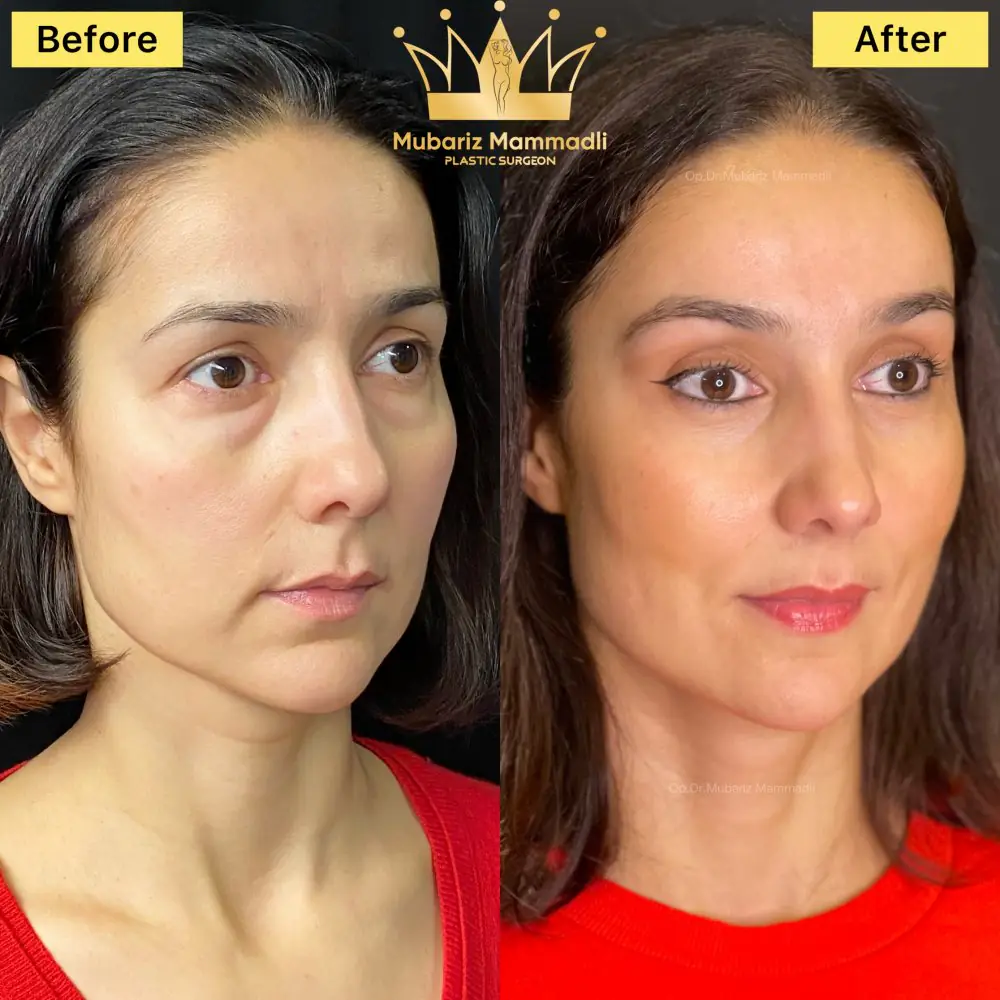
Facial harmony
Combined before and after image for discreet facial harmonization.
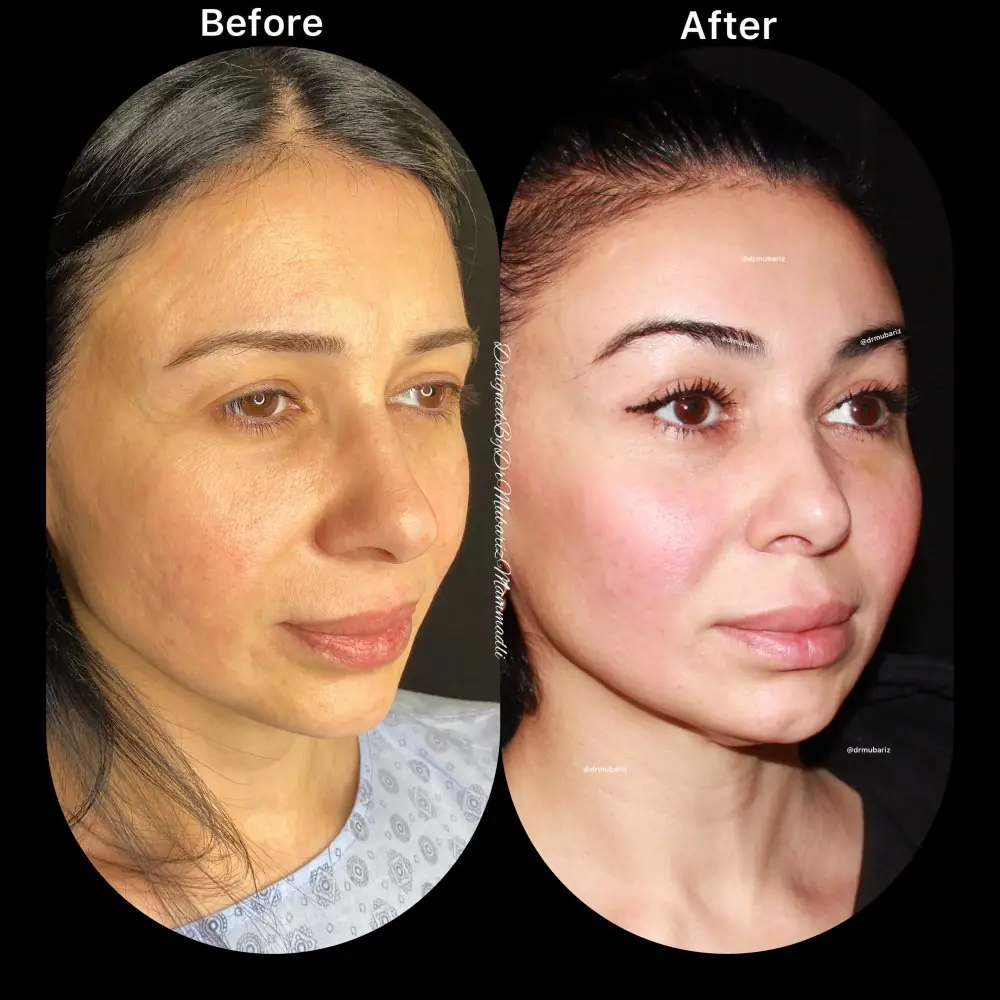
Balanced profile
Combined before and after image for profile refinement.
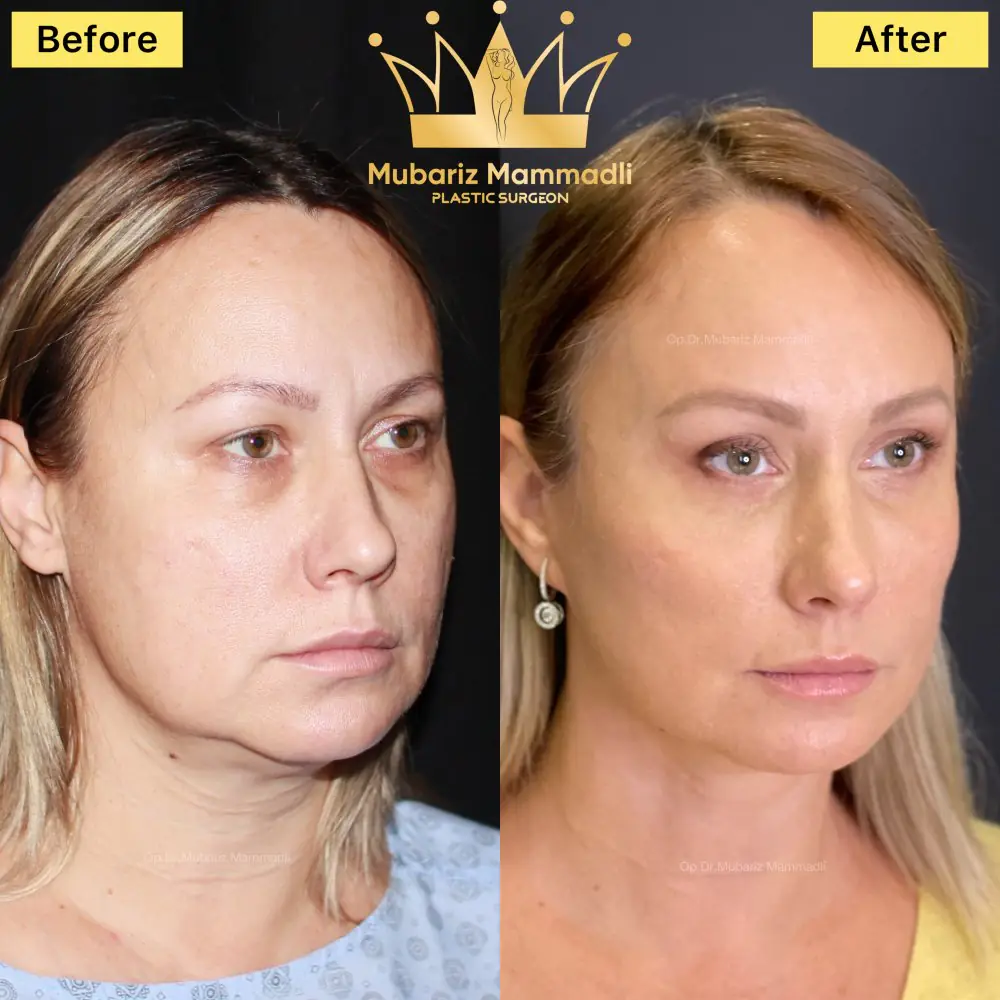
Natural contour
Combined before and after image for more balanced proportions.
Individual results may vary. Images are shared with patient consent.
Need a personalized recommendation?
Send a consultation request and receive the right next steps for your case.