
Endoscopic Mandibular Implants for Jawline Definition
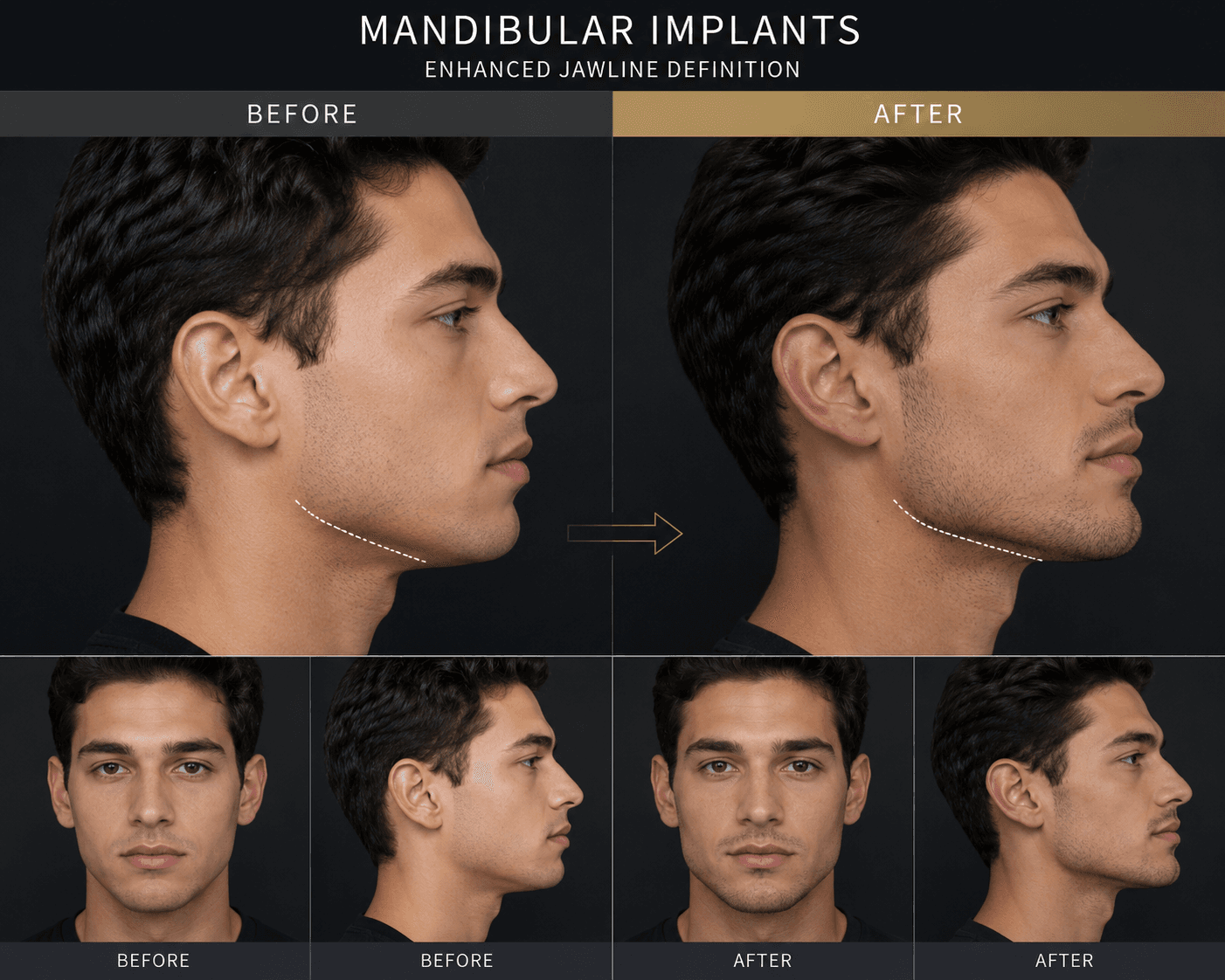
Endoscopic mandibular implants enhance jawline definition and facial balance using minimally invasive techniques with hidden incisions. Modern jawline surgery focuses on natural-looking contour, improved profile harmony, and refined lower facial structure without an artificial appearance.
Endoscopic Mandibular Implants for Jawline Definition
Endoscopic mandibular implants represent one of the modern approaches to jawline enhancement and lower face contouring in facial aesthetic surgery. In 2026, patients increasingly seek strong but natural jawline definition, facial balance, and structural harmony rather than exaggerated or artificial facial changes.
The mandibular angle and jawline play a major role in facial aesthetics. A weak or poorly defined lower face may affect facial proportions, neck contour, and overall profile appearance. Endoscopic mandibular implant techniques are designed to improve jawline structure while minimizing visible scars and tissue trauma.
Using endoscopic visualization, the surgeon can precisely create a pocket and position the implant through smaller, carefully hidden incisions. Compared with traditional open techniques, the endoscopic approach allows better visualization of anatomical structures, more controlled dissection, and potentially reduced tissue disruption.
Mandibular implants may help:
Enhance jawline definition
Improve facial symmetry
Create a stronger lower facial contour
Improve profile balance
Support neck and chin aesthetics
Masculinize or structurally balance the face
One of the advantages of modern endoscopic approaches is the ability to achieve more anatomical and refined contouring while preserving natural facial appearance. Patients today prefer elegant facial definition rather than overly sharp or artificial results.
Mandibular implants are often combined with genioplasty, neck contouring, rhinoplasty, or facial rejuvenation procedures for complete facial harmony.
Recovery varies depending on the extent of surgery and implant type, but most patients experience temporary swelling and gradual improvement over several weeks.
In modern facial surgery, the goal is not to change identity, but to enhance structure, balance, and confidence through individualized treatment planning and natural-looking results.
Want a tailored opinion? Schedule a discreet consultation with Dr. Mubariz Mammadli.
Related reading
Aesthetic medicine blog
Education
How to Select a Good Plastic Surgeon
Choosing a good plastic surgeon means choosing safety, experience, trust, and natural results. A qualified surgeon explains realistic expectations, risks, recovery, and creates a personalized plan based on the patient’s anatomy, not trends or exaggerated beauty standards.
Education
Surgery vs. Minimally Invasive: Which Is Better?
Minimally invasive treatments are ideal for prevention, small corrections, and fast recovery, while surgery is recommended for deeper tissue descent, excess skin, and long-lasting structural results. The best aesthetic outcome comes from choosing the right method at the right time.

Education
"I Don't Want to Look Operated": The New Face of Beauty
“I don’t want to look operated” has become the new standard in modern aesthetic surgery. Today’s patients seek natural beauty, refined facial harmony, and elegant rejuvenation. The best result preserves identity and creates a fresher, younger, more rested appearance.